
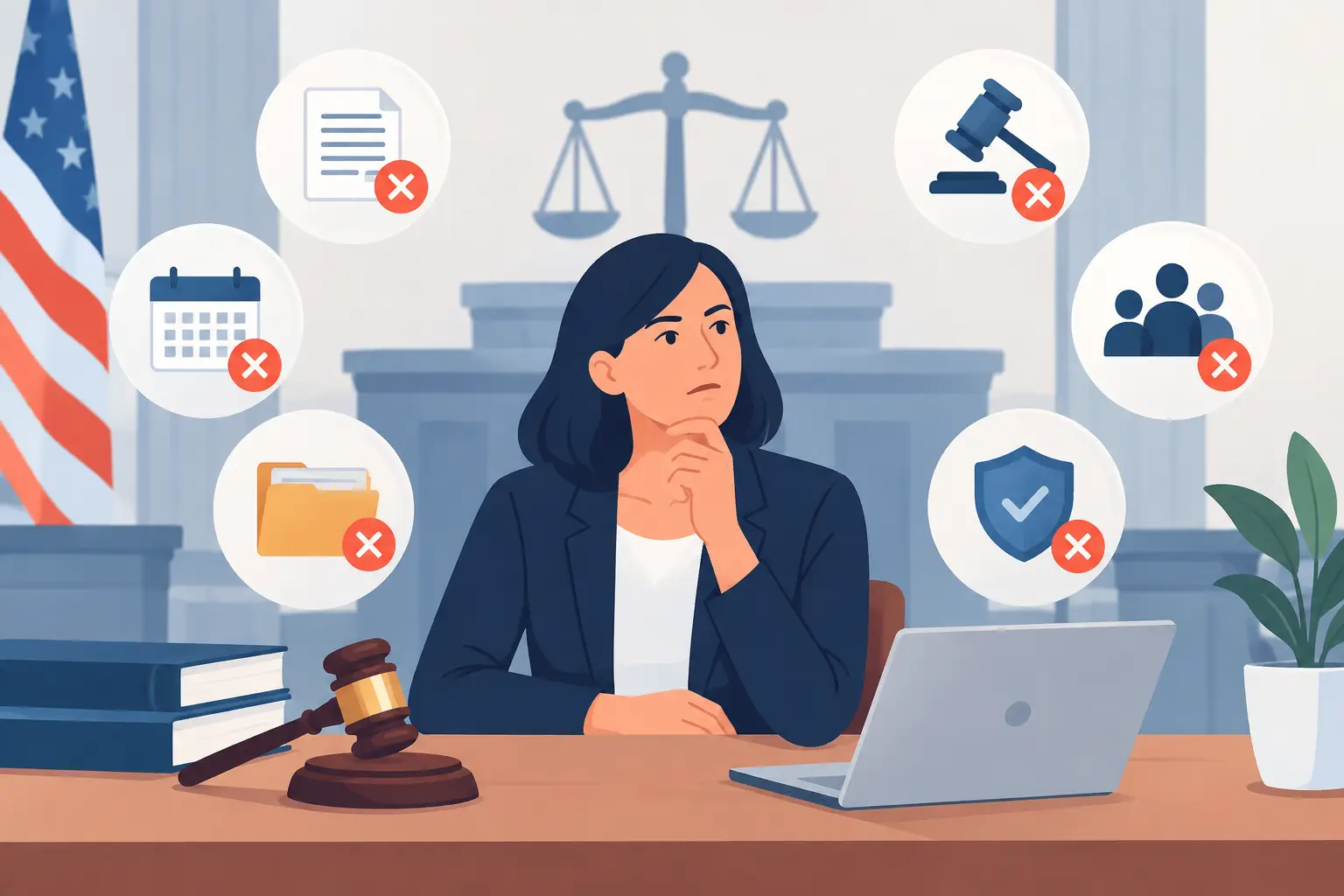
A court order can look simple until you try to act on it. A line such as “complete alcohol education” may leave unanswered questions about program length, provider approval, deadlines, proof of completion, and who must receive the paperwork. That uncertainty is where common court compliance mistakes happen. Most are avoidable, but they can lead to rejected certificates, added costs, missed deadlines, or difficult conversations with probation.
The safest approach is not to guess. Read the order closely, confirm the details with the authority overseeing your case when needed, and keep a clear record of every step you take.
1. Enrolling Before Confirming the Exact Requirement
The biggest mistake is choosing a course based only on a general description. A court may require a specific number of hours, a particular subject, a live format, an in-person assessment, or a provider approved by a state, county, court, or probation department. A DMV requirement may not be identical to a court requirement, even when both relate to the same offense.
Before enrolling, identify the exact program named in your paperwork. Look for required hours, completion dates, delivery format, jurisdiction, and any wording about approved providers. If the order is unclear, ask your probation officer, court clerk, attorney, case manager, or DMV representative to clarify what they will accept. Ask specific questions, such as whether an online self-paced course is permitted and whether a certificate from the provider will satisfy the requirement.
Do not rely on what a friend completed in another county or state. Acceptance rules can vary significantly.
2. Assuming Every Online Course Is Accepted
Online education can be a practical option for people balancing work, family responsibilities, transportation limits, and court deadlines. But convenience does not replace authorization. Some authorities accept online education without issue, while others require live instruction, a local provider, a formal assessment, or a program on an approved list.
This is one of the common court compliance mistakes that creates the most frustration because students may finish a course in good faith and learn afterward that their authority wanted a different format. Confirm acceptance before you begin whenever possible. Keep written confirmation if the court, probation department, or attorney provides it.
A provider can explain its course format, hours, credentialing, certificate process, and acceptance policies. It cannot decide what your judge, probation officer, DMV, or employer will accept. That decision belongs to the requesting authority.
3. Selecting the Wrong Course Length
A two-hour victim impact program, a 12-hour alcohol education course, and a 48-hour or 78-hour DUI program serve different requirements. Completing a shorter course does not usually satisfy an order for more hours. Completing a longer course may also be unnecessary if the authority only requested a short educational program.
Match the course length to your paperwork. If the order says “DUI school” but does not list hours, do not assume. Find out whether the requirement is a victim impact panel, alcohol and drug education, a state-specific DUI program, or another condition entirely.
Parents enrolling a minor for a Minor in Possession requirement should follow the same process. The minor’s citation, diversion agreement, school requirement, or court order may identify a particular class length or subject matter.
4. Waiting Too Long to Start
Many people focus on the final due date and overlook the time needed to review lessons, complete required activities, take the final exam, download a certificate, submit documentation, and correct an unexpected issue. Starting the day before a deadline leaves no room for technical problems, questions about acceptance, or a request for additional paperwork.
Create a personal deadline that is earlier than the court deadline. If your certificate must reach probation by Friday, aim to finish the program and send documentation several business days in advance. This is especially important if a third party must review, upload, mail, or verify your records.
Self-paced courses offer flexibility, but they still require steady progress. Schedule realistic study blocks instead of assuming you will find a large amount of free time later.
5. Missing a Separate Enrollment or Reporting Step
Course completion and court compliance are not always the same thing. You may need to enroll in a program by a certain date, provide proof of enrollment before completion, attend a hearing, sign a release form, complete an assessment, or report your progress to probation.
Read every document you received, including sentencing paperwork, probation instructions, notices from the DMV, and emails from your attorney. Pay attention to words such as “enroll,” “complete,” “submit,” “appear,” and “provide proof.” Each one may describe a separate obligation.
If your provider offers third-party documentation delivery, confirm the correct recipient name, email address, mailing address, case number, and deadline. A certificate sent to the wrong office may not be added to your file on time.
6. Failing to Keep Completion Records
Never assume that a court, probation department, or employer automatically received your certificate. Even when documentation is sent on your behalf, retain your own records. Download the certificate as soon as it becomes available and save it in more than one place, such as a secure cloud folder and your email.
Keep copies of your enrollment confirmation, receipt, course certificate, correspondence about approval, and proof that you submitted documents. Write down the date, time, recipient, and method of submission. If you speak with an office by phone, note the staff member’s name and what they told you.
This small amount of organization can matter if a document is misplaced or a system has not updated. You should be able to show what you completed and when you completed it.
7. Using Inaccurate Personal or Case Information
A misspelled name, incorrect date of birth, missing middle initial, or wrong case number can cause avoidable delays. Courts and probation departments often need to match your certificate to an existing file. If the information does not match, staff may not know where to place it.
Enter your legal name as it appears on your court paperwork unless the authority gives you different instructions. Review your certificate before submitting it. If you notice an error, contact the provider promptly rather than altering the document yourself.
Identity verification is part of program integrity. Complete your own course work, use your own account, and follow any verification requirements. Having another person take a course for you can jeopardize acceptance and create a more serious compliance problem.
8. Treating the Final Exam as the Only Requirement
Passing a final exam is often one step, not the whole process. A course may require completion of every lesson, time-based participation, identity checks, surveys, live-session attendance, or a final assessment. A live Zoom class may have its own attendance and participation rules.
Review the provider’s completion requirements before you start. If unlimited exam attempts are available, that can reduce pressure, but it does not remove the need to complete the full program honestly. Make sure you know when your certificate becomes available and whether any additional action is required after passing.
9. Ignoring Problems Until the Deadline Has Passed
A confusing court order, rejected certificate, missed class, login problem, or lost paperwork is easier to address early. Silence rarely improves a compliance issue. Contact the appropriate party as soon as you recognize a problem, whether that is your provider, attorney, probation officer, court clerk, or DMV representative.
Be direct and prepared. Explain what happened, state the deadline, and provide relevant documents. Ask what action is needed to correct the issue. Depending on the situation, you may need a replacement certificate, a different course, an extension request, or written verification from the provider.
A Simple Compliance Check Before You Submit
Before you consider the requirement finished, compare your certificate against the order one more time. Confirm that the course topic and hours match, your name and identifying information are correct, the completion date is on time, and the correct authority has received the documentation.
For students who need a flexible online option, MyDUIClass provides immediate downloadable PDF certificates after eligible course completion and can help explain its documentation process. Still, the final responsibility is yours: verify that the specific program meets the requirements of the authority handling your case.
Court-ordered education may feel like one more burden during an already stressful period. Treat it as a documented process, not just a class to finish. A few careful checks at the beginning and a saved record at the end can protect the progress you worked to complete.