
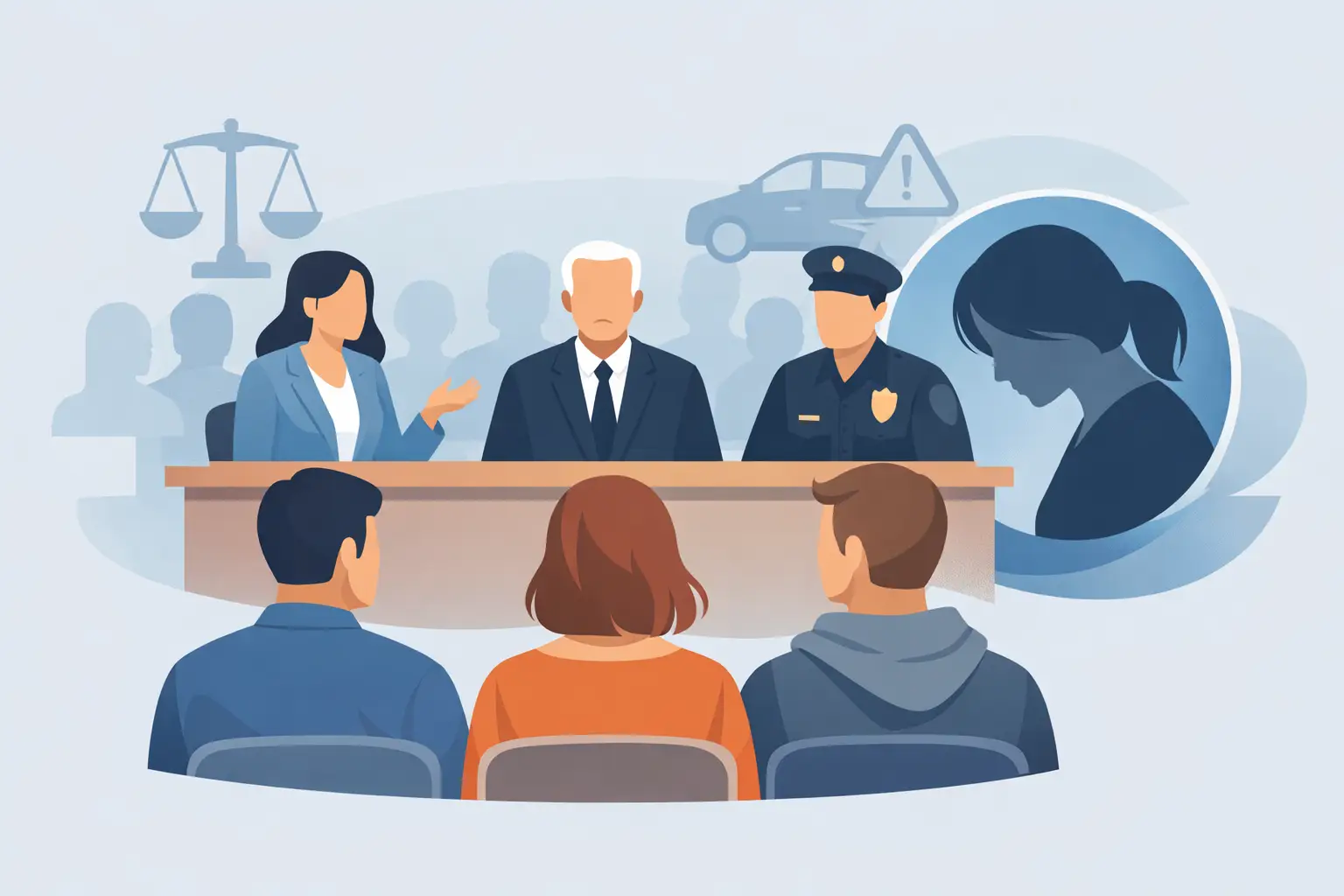
A victim impact panel is often assigned after a DUI, alcohol-related offense, drug-related case, or similar citation. It can feel like one more item on a long compliance list, but the purpose is specific: to help participants understand the real human consequences of impaired driving and substance-related decisions. Completing the right program, for the required number of hours and in the format your authority accepts, is what turns that requirement into a completed obligation.
What Is a Victim Impact Panel?
A victim impact panel, sometimes called a VIP or victim awareness program, presents the experiences of people affected by impaired driving. Depending on the program, participants may hear from victims, family members, first responders, or educators who address injuries, loss, legal consequences, and the lasting effects of a single decision.
This is not usually the same as a DUI education course, substance abuse assessment, treatment program, or alcohol and drug counseling. A court may require one program or several. For example, an order might require a two-hour victim impact program plus a 12-hour DUI education course and community service. Each item should be completed separately unless your court, probation officer, attorney, or DMV has confirmed otherwise.
The point is not to make assumptions based on the name of a course. Read the exact language in your court order, sentencing paperwork, probation conditions, attorney instructions, or DMV notice. Look for the required program title, number of hours, deadline, delivery format, and where proof of completion must be sent.
Who May Be Required to Complete a Victim Impact Panel?
Courts and probation departments use victim impact programming in different ways. It may be ordered for a first DUI, a wet reckless plea, a drug or alcohol-related offense, a Minor in Possession citation, or another case involving unsafe conduct. Some people take a panel because an attorney recommends it before a hearing. Others need it for probation compliance, an employer request, or a reinstatement-related process.
Requirements vary by state, county, judge, and case. A program accepted in one jurisdiction may not satisfy another jurisdiction’s rules. That is why the safest first step is confirming the requirement before enrolling, particularly if your paperwork says “live,” “in person,” names a specific provider, or requires a particular curriculum.
If you are a parent or guardian enrolling a minor, verify whether the order calls for a youth-focused MIP course, a victim impact panel, or both. A standard adult DUI program may not meet a minor’s requirement.
How Long Does a Victim Impact Program Take?
Many victim impact programs are short, often around two hours, but there is no universal length. Your required hours control. Do not assume that a shorter course will count toward a longer mandate, and do not assume a longer educational course includes victim impact content unless the issuing authority says it does.
An online, self-paced format can be useful when you are managing work, family, transportation limitations, or a tight deadline. It allows you to complete lessons from a private location and return where you left off. Still, convenience does not replace compliance. If your order requires a live presentation or attendance at a local panel, a self-paced online course may not be an acceptable substitute.
Before you begin, ask the authority responsible for your case whether an online victim impact panel is permitted. Get the answer in writing when possible. An email from your probation officer, court clerk, attorney, or case manager can prevent confusion later.
What to Verify Before You Enroll
A few minutes of verification can save you from paying for the wrong program or missing a deadline. You do not need to overcomplicate the process, but you do need clear answers.
First, confirm the required course length. Second, ask whether online completion is allowed and whether the course must be live, self-paced, county-approved, or provided by a named organization. Third, confirm what documentation is required after completion. Some authorities accept a downloadable certificate, while others require the provider to send records directly or complete a release form.
Also check the due date. Courts may set a fixed completion deadline, while probation departments may require proof before the next appointment. Give yourself time for any review, document delivery, or follow-up questions. Waiting until the final day creates unnecessary risk, especially if your certificate needs to be emailed, uploaded to a portal, or delivered to a third party.
Keep a copy of your enrollment confirmation, course receipt, completion certificate, and any written approval for the program format. Store them together with your case number and the name of the person handling your compliance.
What Completion Usually Looks Like
A legitimate online program should clearly explain its course length, pricing, completion rules, and certificate process before you pay. You should know whether there are required identity checks, a final exam, time-tracking requirements, deadlines, or restrictions on skipping course material.
At MyDUIClass, eligible students can complete self-paced coursework online, save their progress, and download a PDF certificate immediately after meeting all program requirements. That can make it easier to provide proof promptly, but students remain responsible for confirming that their court, probation department, DMV, employer, or attorney will accept the selected course.
Accuracy matters when you enroll. Enter your legal name as it appears on your court paperwork, use the correct case number if one is requested, and review the certificate before submitting it. A misspelled name or incorrect case number can delay acceptance even when the course itself was completed correctly.
If a third party needs documentation directly from the provider, follow the required release or authorization process. Privacy rules may prevent a school from discussing your record or sending documents without your written permission. Do not assume that a family member, attorney, or probation officer can request your records for you unless the proper authorization is already in place.
Common Mistakes That Cause Problems
The most common issue is enrolling based on a general internet search rather than the wording of the actual order. “Victim impact” can describe several different programs, and local requirements can be narrow. A course may be educational and credible but still not match a judge’s instruction.
Another frequent problem is treating the certificate as the final step. Completion and submission are separate tasks. If your probation officer requires the certificate by email, your court uses an upload portal, or your attorney needs a copy for a hearing, make sure the document reaches the right person and keep proof that you sent it.
Participants also run into trouble when they rush through material or try to bypass identity and time requirements. Court-ordered education is not simply a document purchase. Providers may track progress, require lesson completion, use quizzes or exams, and verify participant identity. If the course rules are not followed, a certificate may not be issued.
Finally, do not wait to ask questions. If your order is unclear, contact the court, probation department, attorney, or other issuing authority before selecting a program. A provider can explain its own course and documentation process, but it cannot rewrite your court order or guarantee acceptance without the authority’s confirmation.
Questions People Often Ask
Can a victim impact panel be completed online?
Sometimes. Online programs may be accepted when the court or supervising authority permits them. Acceptance depends on your jurisdiction and the exact terms of your order. If the paperwork requires live or in-person attendance, obtain written approval before choosing an online option.
Does a victim impact panel satisfy my DUI class requirement?
Usually, no. A victim impact program and DUI education are commonly separate requirements with different course lengths and subject matter. Complete each program listed in your paperwork unless you receive direct confirmation that one course fulfills both requirements.
When should I send my certificate?
Send it as soon as you complete the program, unless your attorney or probation officer gives different instructions. Save the PDF for your records and retain evidence of submission, such as a confirmation email, portal receipt, or message from the receiving office.
What if my certificate is rejected?
Ask the rejecting authority for the reason in writing. The issue may involve course format, required hours, provider eligibility, missing information, or a local rule. Written documentation gives you a clear basis for speaking with the provider and determining whether another program or additional paperwork is needed.
Your next step is simple: pull out the document that created the requirement, verify the exact program and deadline, and choose a course only after those details match. Finishing early gives you room to handle paperwork calmly instead of trying to solve a compliance problem at the last minute.